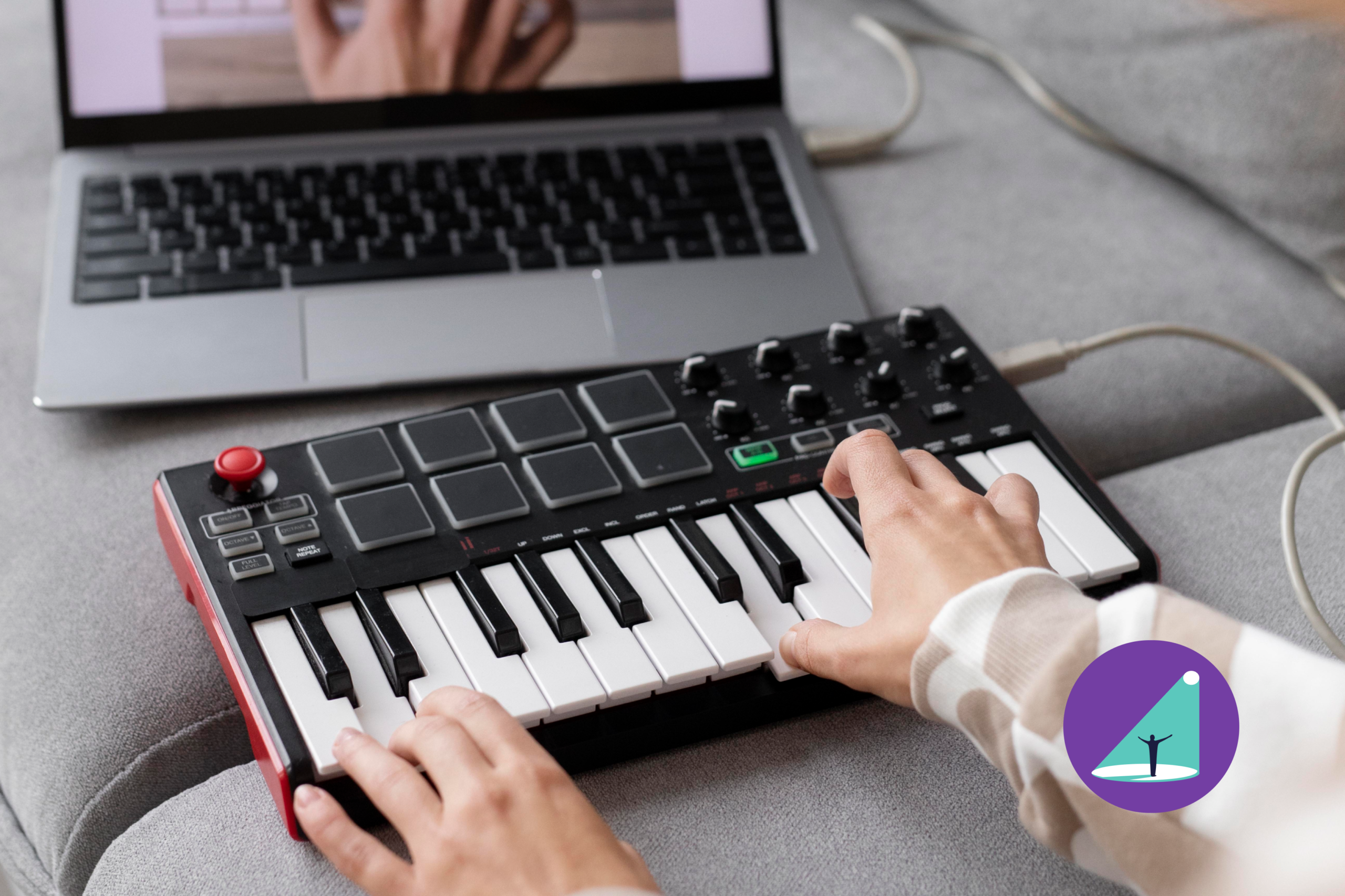
Introduction to MIDI Magic How Talent and Digital Piano Unite
Music is no longer confined to classical instruments and sheet music notebooks. No longer an alternative, today the digital piano is a powerful instrument that opens new creative horizons. Its combination with modern learning technologies multiplies the boundaries of possibilities. MIDI integration; digital piano; Talented app; low-latency feedback; analytics. For learners who prefer accessible tools, even an app learn piano free can benefit from clean signal flow, device integration, and workflow optimization via real-time MIDI and app sync.
Our task is to make the learning process intuitive and engaging. That is why, besides working directly with your digital piano through the MIDI protocol, which is a kind of universal bridge between instrument and software, we have developed an application. A kind of magic this connection is, allowing one to avoid complicated setups and barriers, and turning any session into a living dialog with the music. (This also enables MIDI CC mapping, controller sync, low latency performance, and data routing for advanced practice and hardware compatibility.)
Why does this matter?
- Immediate feedback: It analyzes your playing straight away, underlines any mistakes, and makes suggestions.
- Lesson personalization: Your level, preferences, and even playing style are taken into account.
- Interactivity: Playing from the screen in real time, adapting to your tempo.
Thus, digital piano and digital learning come together into one platform to create expressions of all the musical ideas and emotions.
Talented Technology What It Is and Why It’s Revolutionary for Musicians
The technology that lies behind our mobile assistant is not just a simple MIDI message treatment; it is an intelligent musical assistant which, besides understanding the notes, can comprehend the context of the performance. At its center, several key components are combined:
Components table
| Component | Description | User Benefit |
| MIDI Connection | Standard communication protocol | Easy integration with any digital instrument |
| Real-time Analysis | Moment-by-moment play processing | Instant feedback and corrections |
| Artificial Intelligence | Learning of music and styles | Personalized lessons and recommendations |
| Pedagogical Algorithms | Fragmentation into smaller pieces | Simplification of complicated compositions and step-by-step learning |
This platform detects errors, develops musical ear, rhythm sense, and technique, adapting to the needs of every musician—from a beginner to a professional one. Work with your digital piano is not a routine anymore. Quite the opposite, every lesson turns into a vivid and dynamic process that inspires and encourages striving for perfection. Our software can serve as a virtual mentor that always helps and analyzes improvisations to indicate new routes and encourage frequent practice. Thus, that which seemed daunting while learning now becomes a readily accessible and efficient way into the world of music. (Here the Talented app leverages MIDI integration and analytics through a digital interface and performance analytics.)

Advantages of connecting a digital piano to Talented new opportunities and convenience
The next step is to actually connect the digital piano to Talented, but this opens up an entirely new world of possibility to the musician. A few key advantages immediately present themselves that make this pairing so appealing:
- Interactivity & Adaptability: Talented reacts to every keystroke, taking into consideration dynamics and performance nuances; it develops musical sensitivity and technique.
- Extensive learning features: Inbuilt lessons and personal recommendations are formed based on playing analysis, hence considerably accelerating progress.
- Flexibility in the choice of repertoire: Due to MIDI support, importing and exporting of notes, scores, and songs of any complexity is easy.
- Automatic Goal Setting: The software adapts to the performer’s level of attainment by proposing tasks that impel development without excessive pressure.
- Convenience and ease of use: Fully intuitive, the system is: even beginners will master the setup and control without problems, which means saving time on technical issues.
Worth adding is that Talented turns your digital piano into a full-fledged learning center where every lesson becomes a living interaction with the instrument. This allows one not just to practice but also to plunge into the very substance of music, its rhythm, tempo, and emotional subtext. (This is powered by low-latency feedback and real-time MIDI app sync for seamless instrument connectivity and MIDI setup.)
Working with MIDI Expanding musical possibilities with Talented
MIDI is the language with which digital instruments and programs converse, but in the context of Talented, it becomes the connecting means to a world of endless possibility in musical creativity. Some of the key areas where working with MIDI through Talented changes traditional boundaries include the following:
- Precise transmission of performance nuances. Whether the piano is played fast or quiet, every detail is captured and analyzed by the program—much deeper feedback than the simple playback of notes.
- Expansion of creative horizons: The immediately editable MIDI files can be, and with Talented, you’ll get the chance to experiment with arrangements, tempo, and instruments.
- Compatibility with other programs and devices: MIDI Talented allows export and import, thus enabling the integration of projects into professional DAWs or their sharing with colleagues.
- Extra effects and instrument utilization: Connect your digital piano with Talented, and a whole world of virtual synthesizers, rhythm sections, and built-in effects opens up.
- Feedback and analytics: Not just practice but a way to notice your own mistakes, get recommendations, and make real changes every session with Talented.
Conclusion: MIDI isn’t just technology; it’s a tool for making the boldest musical ideas real. A powerful center of creativity and learning, with Talented your digital piano is where fewer limitations exist for the musician and more opportunities appear. (The Talented app couples analytics with controller sync and signal flow to enhance real-time MIDI performance.)
Practical Examples What Will Change in Your Playing and Creativity
Not only the technical upgrade but connecting a digital piano to Talented is actually an integral part of the transformation in the experience of music. Immediately felt in practice, this manifests through several vivid moments which affect playing and the creative process.
Firstly,
- Lessons become interactive: Talented turns traditional sessions into lively interaction. The program instantly responds to every key press coming from the MIDI keyboard, highlighting mistakes, illuminating the correct notes, and offering exercises based on your weak points. Personalized and effective, this makes learning.
Secondly,
- Real-time composition and arrangement: You could experiment with the different sounds and instruments in your home studio using the Talented talents. For example, you could play a melody on a digital piano and have Talented immediately help you overlay the rhythm, add virtual strings, or percussion so that within minutes you have a full track.
Another practical example —
- Playing analysis and visualization: See dynamics, rhythmic features, and even the nuances of performance that Talented allows through deep MIDI analysis. Not just to reproduce the music but to understand its inner structure and develop your own style—this is really useful for those aspiring.
Finally,
- Share your creations right away. In Talented, it’s easy to record from a digital piano and process in the popular audio and MIDI formats. Now it’s easier to send tracks to teachers or colleagues or publish them on social media.
Thus, connecting to Talented opens more than just a new level in technical equipment development. A whole range of opportunities which it represents deeply transforms the usual process of learning, creativity, and exchanging musical ideas. No longer routine work, playing the digital piano becomes an exciting journey into the world of sound thanks to them. (These gains come from low-latency feedback and real-time processing with robust MIDI integration.)
Comparison to Classical Methods Where Innovation Takes the Lead
In the world of digital music, diving into, how different today’s approach to working with MIDI is compared to the traditional methods, can’t go unnoticed. As developers we see that using advanced mobile applications completely changes the rules of the game in favor of the musician. Why?
- Methods of classical connection presuppose usually intricate settings and supplementary equipment, which frequently frightens away beginners and overcomplicates the process of creative self-expression. On the other hand, in our product, the main attention is given to automation and simplification of interaction:
- Without unnecessary manipulations — fast synchronization.
- Plug in and play — minimal technical barriers.
- An intuitive interface for managing the full breadth of functions.
Secondly, flexibility and adaptability are an integral part of the new paradigm. While classical methods imply fixed settings and strict protocols, our focus is on giving the musician full control:
- The personalization of sound is done via convenient presets and flexible filters.
- In just a few clicks — the ability to create unique combinations of effects and instruments.
- Eliminate delays and loss of expression: instant response to keystrokes.
Mobile-oriented solutions let you escape the bulky studio setups traditionally associated with working with MIDI. Now, your entire music process is in your pocket, which means:
- Create and improve anywhere, anytime — freedom;
- Expanding export and sharing options: Easily integrate with other applications and platforms.
- For fast sharing with the community, support of modern formats.
Important difference—the approach to learning and skill development cannot be overlooked. Classic methods often include long immersion into technical details, while we focus on:
- Interactive tips and tutorials embedded directly into the program;
- User performance analysis and personalized recommendations for progress;
- A forum for sharing experiences, to be inspired by other people.
Whereby, in conclusion, if summed up, it becomes clear that classical methods still are useful, but technology and the mobile approach give musicians the means of releasing creative potential, making work with MIDI natural and inspiring. We are confident that this is the future to strive for in case one wants to break out of familiar sounds and open new horizons. (This is underpinned by analytics and low latency performance through a streamlined digital interface and real-time MIDI app sync.)
Getting started how to quickly set up and start using the connection
Working with a digital piano and Talented is very intuitive and easy. Follow these steps to dive into the world of MIDI magic.
- Device connection
Connect the piano via USB or wireless Bluetooth to your computer or mobile device, if possible. Talented should be installed and opened. - Launch Talented and select the MIDI input
In the program settings select your instrument from the list of the available MIDI devices. Talented recognizes most of the modern digital pianos automatically. - Sound calibration
Perform a simple calibration by following the in-app instructions to optimize sound and eliminate latency. - Testing the functionality
The interface master comes with a mixer, sound presets, recording, and improvisation modes. After just a few minutes of playing with it, you will be able to create music using Talented’s wide capabilities.
Despite the innovation, deep technical knowledge is not required for adaptation. Everything becomes clear and accessible even for a user who has never worked with MIDI interfaces before. The main thing is the desire to experiment and create! (Quick MIDI setup, instrument connectivity, and controller sync ensure low-latency feedback and stable signal flow.)
Conclusion The Future of Music with MIDI and Talented What Does the Future Hold
But this is not only an expansion of creative horizons—the combo digital piano + Talented really changes the approach to creating music altogether. What’s in store for us in the future?
- Further development of artificial intelligence integration: Talented already uses smart algorithms for playing analysis and improvement, and later this will go further and become more personalized.
- Simplifying the learning process: It will turn lessons into an engaging and effective experience for both beginners and professionals, thanks to the combination of educational functions with performance analysis.
- New forms of musical interaction: Feedback capabilities, accompaniment generation, and even the potential for collaborations over the internet will become commonplace.
The secret is that Talented is not just a tool but a full-fledged partner for the musician, able to inspire and develop creative potential. In the future, MIDI and digital creativity will merge, opening up new, unparalleled opportunities for musicians. If today you take the first step, tomorrow you will already be the creator of a new musical world. (As MIDI integration, digital piano connectivity, Talented app enhancements, low-latency feedback, and richer analytics evolve, advanced practice and performance analytics will become standard in data routing and signal flow.)